
Lovegobuy Finds
Spreadsheet
OVER 5000+
WITH QC PHOTOS
Click the images below to browse!
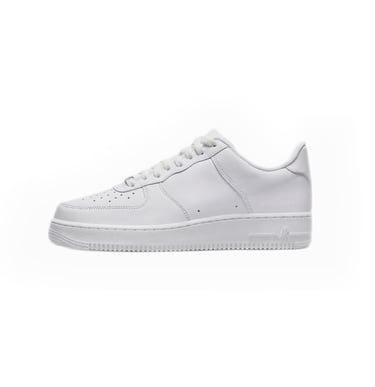
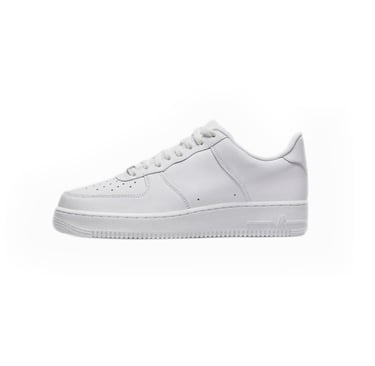

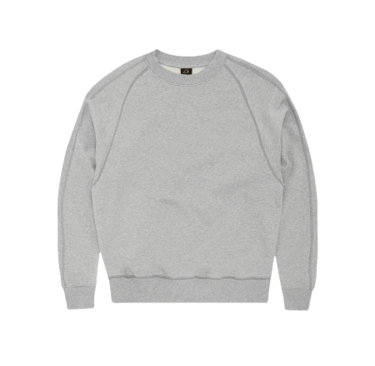
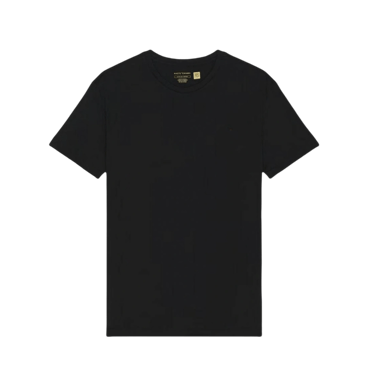


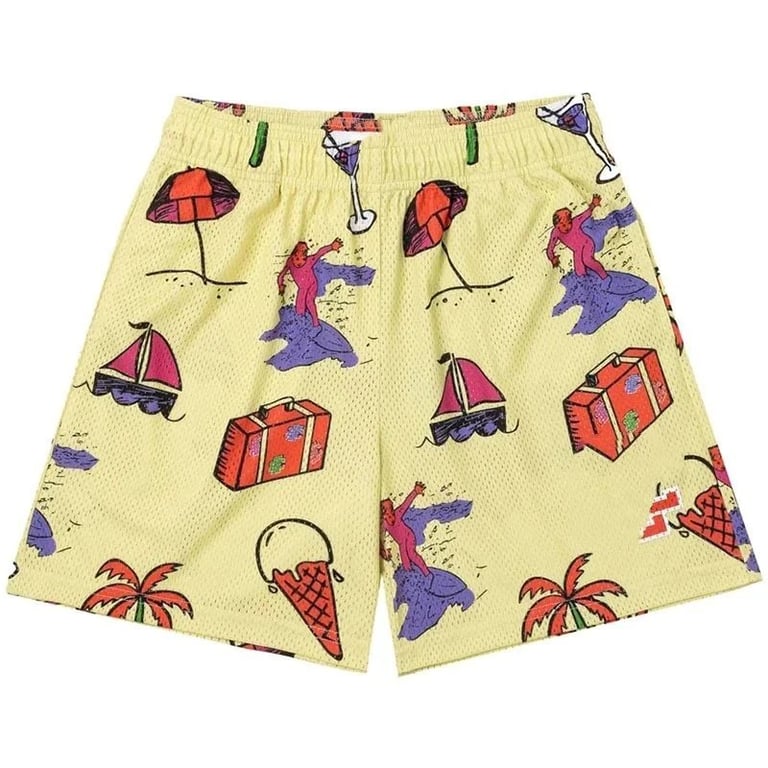
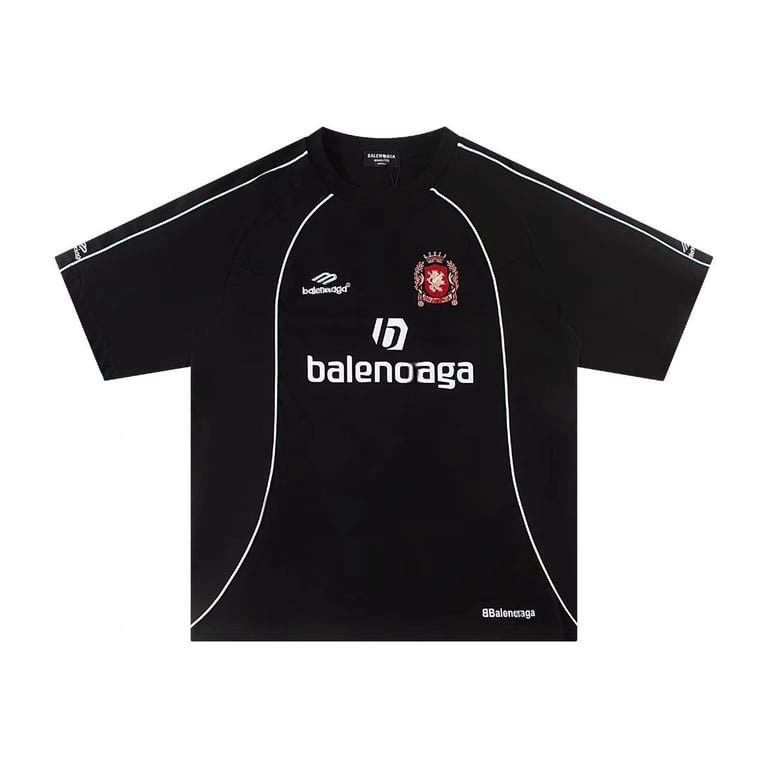


How Lovegobuy spreadsheet identifies trending products in real time
In cross-border ecommerce, trends are often misunderstood as sudden viral spikes or short-term popularity bursts. In reality, most “trending products” do not appear instantly—they form gradually through measurable changes in supply behavior, listing frequency, and category expansion before they ever become visible to end users.
The Lovegobuy spreadsheet is designed to detect these early-stage changes by analyzing how products evolve inside supplier ecosystems. Instead of relying on external signals like social media hype or sales rankings, it focuses on structured movement patterns inside product data itself.
1. Trend formation starts before visibility
Most users only recognize a trend when it is already widely available. However, the earliest indicators appear much earlier in supply-side behavior:
Similar products begin appearing across multiple micro-stores
New variations of the same product are introduced rapidly
Product listings expand within a narrow category cluster
Supplier duplication of similar items increases in a short time frame
These changes signal that demand pressure is building, even before it becomes visible in mainstream platforms.
The spreadsheet captures these signals at the structural level rather than the traffic level.
2. Early demand indicators come from repetition patterns
One of the strongest indicators of emerging trends is repetition—not in sales, but in listings.
The Lovegobuy spreadsheet tracks how often similar products appear across independent suppliers. When multiple unrelated sellers begin listing near-identical products within a short period, it indicates that the market is responding to the same underlying demand.
This repetition is important because it reveals:
Supply chain alignment around a specific product type
Rapid adoption of a product concept across micro-stores
Early confirmation that demand is not isolated
Unlike traditional metrics, this does not rely on consumer visibility but on supplier behavior synchronization.
3. Tracking momentum instead of static popularity
Traditional “trending” systems focus on what is popular at a given moment. The Lovegobuy spreadsheet instead focuses on how quickly a product is spreading.
It evaluates:
How fast new listings appear for similar products
Whether product variations are expanding or stabilizing
Whether a category is gaining density over time
Whether suppliers are continuously adding related items
This shift from static popularity to growth momentum allows the system to detect trends earlier in their lifecycle.
A product that is rapidly spreading across suppliers is often more important than one that is already widely known.
4. Category-level clustering reveals hidden trends
Trends rarely exist as isolated products. They typically emerge as clusters of related items within a category.
The Lovegobuy spreadsheet identifies category-level signals by observing:
Multiple related products appearing in the same segment
Rapid expansion of subtypes within a category
Similar functional products being introduced by different suppliers
Increased density of listings within a narrow product group
When an entire category begins to expand at once, it indicates structural demand—not just individual product success.
This helps distinguish between a single viral item and a broader market movement.
5. Filtering out artificial or temporary spikes
Not every increase in product activity represents a real trend. Some spikes are caused by temporary factors such as promotions or clearance cycles.
The system filters these by identifying:
Sudden bursts of listings with no follow-up expansion
Duplicate products that do not evolve into variations
Short-term price-driven activity without structural growth
Isolated supplier behavior not mirrored across the ecosystem
These patterns are treated as noise rather than trend signals.
Only sustained, multi-source expansion is considered meaningful.
6. Understanding market timing through lifecycle stages
A key part of trend identification is understanding where a product sits in its lifecycle.
The Lovegobuy spreadsheet implicitly separates products into stages:
Early emergence: limited but expanding presence across suppliers
Growth phase: rapid listing expansion and variation increase
Saturation phase: high density but slowing growth
Decline phase: reduced activity and fewer new listings
The most valuable opportunities usually exist in the transition between emergence and early growth, where competition is still low but demand is accelerating.
7. Verification through Lovegobuy links
Trend detection alone is not enough for decision-making. It must be validated against real supplier conditions.
Through Lovegobuy links, users can:
Open original micro-store product pages directly
Confirm whether listings are active and consistent
Compare pricing stability across suppliers
Verify whether product duplication reflects real supply or just data repetition
This step ensures that identified trends are grounded in actual market availability rather than abstract patterns.
Conclusion
The Lovegobuy spreadsheet identifies trending products in real time by focusing on structural changes in supplier behavior rather than external popularity signals. It detects trends through repetition patterns, category expansion, and acceleration in listing activity, while filtering out temporary spikes and artificial noise.
Instead of reacting to trends after they peak, the system is designed to reveal them while they are still forming—when supply chains begin to synchronize but before market saturation occurs.
When combined with Lovegobuy links, this becomes a complete system that connects early trend detection with real-world validation, enabling faster and more accurate sourcing decisions in cross-border ecommerce.


How Lovegobuy links improve viral product access speed
In cross-border ecommerce, viral products have one defining characteristic: speed sensitivity. Once a product starts gaining traction, its availability window can shrink rapidly due to stock depletion, price adjustments, or supplier replication delays. In many cases, the difference between profit and missed opportunity is not product discovery, but access speed.
The Lovegobuy links system is designed to solve this exact bottleneck by turning product access into a direct, click-based navigation process. Instead of forcing users to re-search, re-filter, and manually locate supplier pages, it enables immediate entry into verified product destinations.
This article explains how Lovegobuy links improve viral product access speed through navigation optimization, click-based sourcing design, and UX acceleration.
1. Viral product value is time-dependent, not static
Viral products do not behave like stable catalog items. Their value decreases over time due to:
Rapid supplier replication
Price inflation after demand spikes
Stock shortages in micro stores
Increased competition among buyers
This means that access delay directly reduces potential value.
In this environment, even a 1–2 minute navigation delay can significantly impact sourcing outcomes.
2. Removing search friction from the access path
Traditional access flow requires multiple steps:
Searching product keywords
Filtering across suppliers
Opening multiple irrelevant listings
Verifying correct product pages manually
Each step introduces delay and increases the chance of losing the opportunity.
The Lovegobuy links system removes these intermediate steps by providing direct entry points into product pages.
Instead of searching for the product, users simply click into it.
3. Click-based sourcing replaces manual navigation loops
One of the core improvements introduced by Lovegobuy links is replacing navigation loops with direct click routing.
This changes the workflow from:
manual search → filtering → comparison → page finding
to:
single click → product page → validation
This reduces cognitive load and eliminates unnecessary decision points before access.
The result is a significantly faster transition from discovery to action.
4. Reducing UX delay in multi-source environments
Viral products are often listed across multiple micro stores simultaneously. Without structured navigation, users must:
Open each supplier individually
Reconfirm product identity repeatedly
Compare inconsistent page structures
Rebuild context for every new tab
The Lovegobuy links system standardizes this experience by providing pre-aligned navigation paths to each supplier page.
This ensures that switching between sources does not require repeated reorientation.
5. Optimizing access speed through structured routing
Behind Lovegobuy links is a structured routing system that connects:
Spreadsheet product entries
Verified supplier pages
Category-level groupings
Cross-store equivalents
Instead of treating each product as an isolated endpoint, the system treats them as part of a connected routing network.
This allows users to move between related listings without restarting the search process.
6. Eliminating “re-discovery time” in viral sourcing
A hidden inefficiency in viral product sourcing is re-discovery time—the time spent trying to find the same product again after initial exposure.
Without structured links, users often:
Forget exact product names
Lose original supplier pages
Reconstruct search queries multiple times
Lovegobuy links eliminate this entirely by acting as permanent access anchors from the Lovegobuy spreadsheet directly to the source page.
This ensures that once a product is identified, it remains instantly accessible.
7. Improving decision speed through faster validation cycles
Faster access also improves decision-making speed.
With Lovegobuy links, users can:
Open supplier pages immediately after discovery
Check pricing and availability in real time
Compare multiple suppliers in parallel
Validate whether the product is still in its viral window
This shortens the time between identification and confirmation, which is critical for time-sensitive products.
8. Integrating speed with structured product intelligence
The real power of Lovegobuy links comes when combined with the Lovegobuy spreadsheet.
The spreadsheet provides:
Identification of viral product signals
Structured clustering of similar items
Category-level trend grouping
The links provide:
Instant execution access
Real-time verification
Cross-supplier comparison routing
Together, they create a two-layer system:
structured detection → instant execution
Conclusion
The Lovegobuy links system improves viral product access speed by eliminating search friction, reducing navigation loops, and enabling direct click-based sourcing across micro stores. In fast-moving ecommerce environments, this speed advantage directly impacts sourcing success.
Instead of spending time locating products, users move immediately from identification to validation, ensuring they can act within the narrow time window where viral products retain maximum value.